GeoPageScan: Can ChatGPT and Perplexity Actually See Your Website?
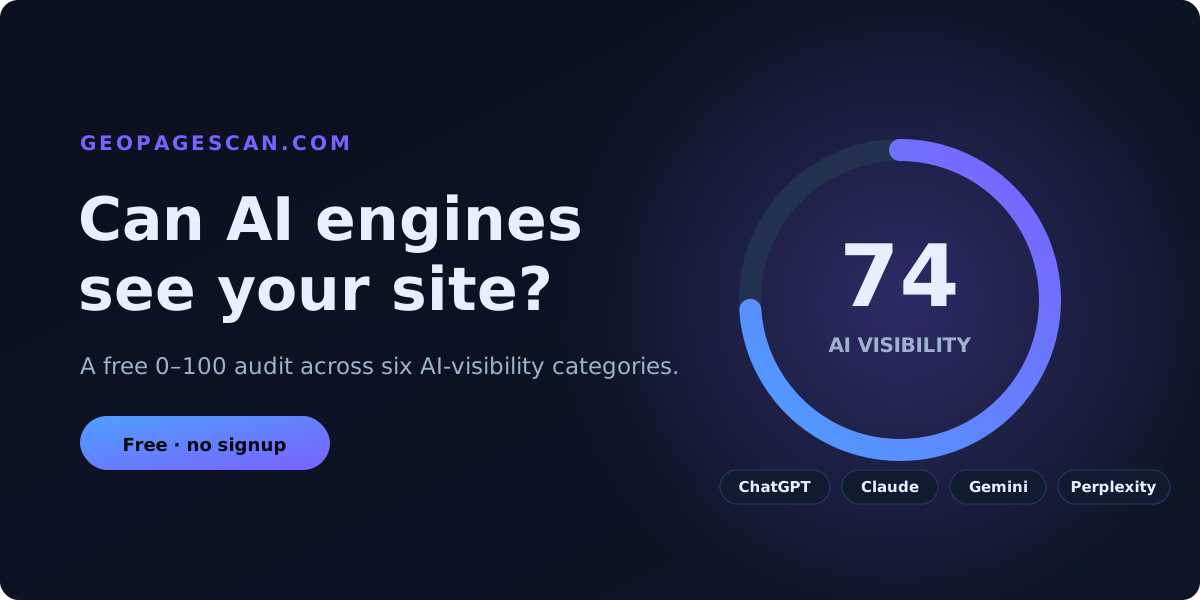
Search is quietly changing shape. Between 40% and 70% of searches now end with an AI-generated answer instead of a list of blue links. If ChatGPT, Claude, Gemini, or Perplexity can't parse your page, you simply won't appear in that answer — no matter how well you rank on classic Google. GeoPageScan is a free tool that tells you, in a single 0–100 score, whether AI engines can actually see and cite your site.
Why "AI visibility" is now its own discipline
Traditional SEO optimizes for a crawler that ranks pages. AI visibility — sometimes called GEO (Generative Engine Optimization) or AEO (Answer Engine Optimization) — optimizes for a model that *reads, summarizes, and quotes* pages inside a generated answer.
Those are different jobs. A page can rank on page one of Google and still be invisible to an LLM because it lacks structured data, buries its answer under three paragraphs of preamble, or blocks AI crawlers in robots.txt. GeoPageScan measures the second thing.
The six things GeoPageScan checks
Enter any URL — no login, no credit card — and GeoPageScan scans the page's HTML, structured data, and configuration files, then scores six categories:
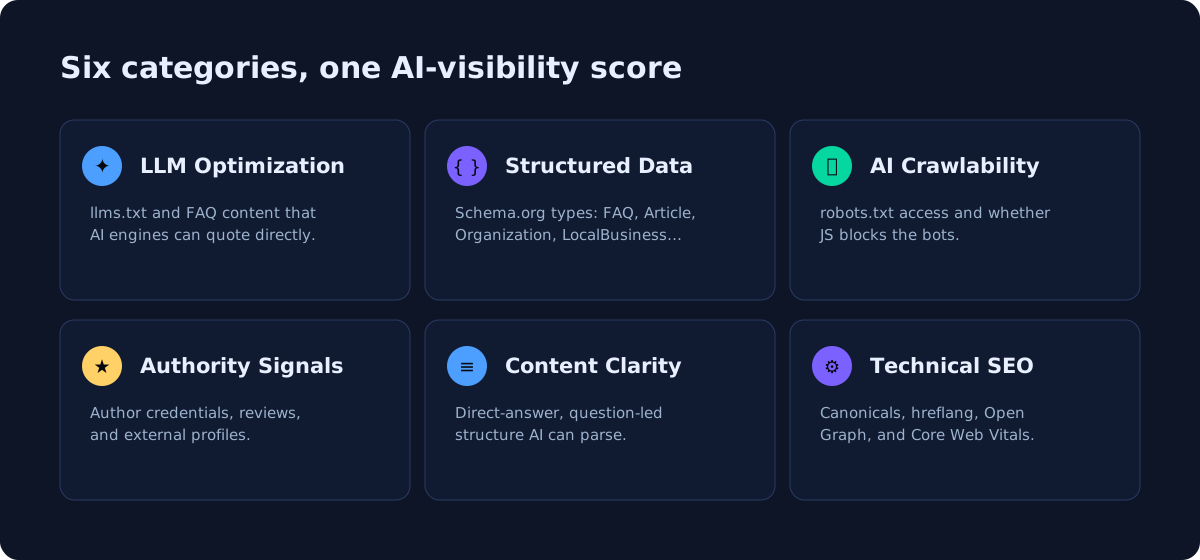
1. LLM Optimization — llms.txt files and FAQ content that AI engines can quote directly.
2. Structured Data — Schema.org types such as FAQPage, Organization, LocalBusiness, Article, HowTo, and AggregateRating.
3. AI Crawlability — whether robots.txt allows AI bots and whether JavaScript blocks them from your content.
4. Authority Signals — author credentials, reviews, and external profiles that establish trust.
5. Content Clarity — direct-answer, question-led structure that models can extract cleanly.
6. Technical SEO — canonical tags, hreflang, Open Graph, and Core Web Vitals.
Each category gets its own score and specific, actionable recommendations — so you know exactly what to fix first.
How to run a scan
It takes about fifteen seconds:
- Go to geopagescan.com.
- Paste the URL you want to audit.
- Read your 0–100 score and the six category breakdowns.
Agencies use it to run instant prospect audits, founders use it to benchmark competitors, and SEO teams use it to prioritize the work that actually moves AI visibility.
GeoPageScan powers VitalSite's Visibility pillar
Full disclosure: we built GeoPageScan, and it is the same engine behind VitalSite's Visibility Intel. When VitalSite audits your whole domain for security, visibility, and accessibility in one scan, the visibility half is GeoPageScan working across every page.
That means you can use it two ways: run a quick, free, single-page AI-visibility check at geopagescan.com, or scan your entire domain with VitalSite to combine it with security and accessibility in one prioritized report.
Turn your score into action
A visibility score is only useful if it changes what you ship. Start with the lowest-scoring category, apply the recommendations, and re-scan to confirm the number moves. Add structured data, publish a clear FAQ, unblock the AI crawlers, and lead with direct answers — and you'll steadily become one of the sources AI engines actually cite.
FAQ
What is an AI visibility score?
+Is GeoPageScan free?
+How is AI visibility different from SEO?
+Is GeoPageScan related to VitalSite?
+Scan your own domain free
See which of these issues affect your site — with exact fixes.
Scan Your Domain — Free